Christmas Food in the 1800s and Early 1900s
Arkansans celebrated Christmas from December 6, St. Nicholas Day and continued through Old Christmas on January 5 or Epiphany on January 6. Different traditions of settlers meant different dates of celebration, so it was celebrated throughout the month. Old Christmas was the date of Christmas on the old Julian calendar before it was replaced by the Gregorian calendar in the mid-18th century.
Food played a big part in Christmas celebrations. Wonderful aromas would drift from the kitchen. In the 1800s the big meal of the season was centered around duck, home raised and cured ham, chicken, rabbit, or goose. Sometimes there would be turkey which would usually be a wild one killed by one of the hunters in the family. The meal might also include chicken and dumplings, venison, and bacon. Cornbread was the bread of choice, but a good year might include biscuits. There were always home preserved vegetables and usually apple cider. Christmas cakes and eggnog were included along with mincemeat made of lean tender pork mixed with chunks of dried peaches, apples, and plums.
Fruitcake dates all the way back to a food of the ancient Romans called Satura, a mix of barley, pomegranate seeds, nuts, and raisins held together with honey. A more familiar version gained popularity in the 18 and 19 Century when ingredients were expensive and hard to come by, making it a rare delicacy enjoyed only at Christmas.
Santa usually left an orange in each child’s stocking and after eating and enjoying each segment, they would take the peels to the kitchen where they would be minced to flavor some delicacy or made into marmalade. Stockings might also include an apple, a banana, a coconut, raisins, a stick of candy, and all kinds of nuts that were not common for the rest of the year. These were delicious treats for children who rarely got such things. Bob Biggers (1874-1964) grew up in the Means Community. He and his siblings got stockings stuffed with stick candy, apples, oranges, raisins, and nuts and on Christmas the family came to town for the Christmas tree at the Methodist Church.
Lula Brown (Biggers) (1879-1969) lived in the Locust Bayou area. In her teens there was one big Yuletide event that all the young people looked forward to. That was the all-night party at the Worth Yeager home. Young and old in the neighborhood would gather at the Yeager place for a party. The young people played games and danced until midnight when they were invited into the kitchen where the Christmas feast was spread with baked hams, meats, and cakes. The party lasted until the morning hours.
In the early 1900s, families began to try out new foods such as Karo Syrup and Jell-O. Then the two World Wars caused many families to cut back on Christmas celebrations. The Depression made celebrations especially difficult for families because very little money was to be had.
Food for Santa and the reindeer was also remembered. In the mid to late 1800s children left oats, corn, and apples for the reindeer and later they left milk and cookies for Santa.
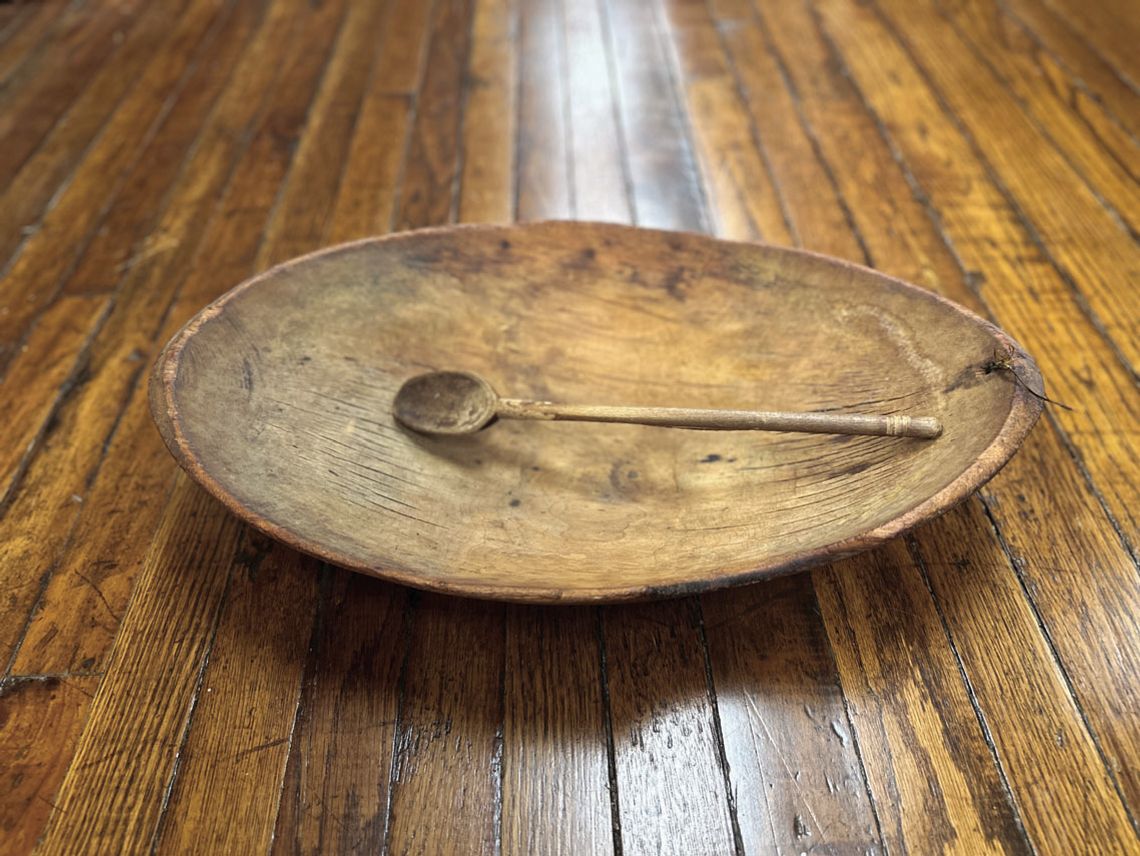
The featured photograph shows a bread bowl and spoon donated by a Calhoun County resident that were used regularly in the same time period as these recipes. This artifact, as well as many other kitchen and household items from the late 1800s, can be seen at the Calhoun County Museum.
Sources: Willma Humphreys-Newton's writing; The History of Chambersville; Reader’s Digest; “The History of 10 Christmas Traditions”; and other unidentified writings.